If you’re searching for the best time to buy AC Ontario, you’re already ahead of most homeowners who wait until the first heatwave hits to replace their air conditioner—often paying premium prices in the process. Timing your AC purchase strategically can save you between $500 and $2,000 on equipment and installation, while also ensuring you get priority service before contractors’ schedules fill up.
This guide is for Ontario homeowners who want to make a smart, informed decision about when to invest in a new air conditioning system. You’ll learn exactly which months offer the lowest prices, how seasonal demand impacts costs, when manufacturers release rebates, and why buying during the off-season gives you leverage for better deals and workmanship.
Whether you’re replacing an aging unit or installing AC for the first time, understanding the pricing cycle in Ontario’s HVAC market will help you maximize value without sacrificing comfort.
This guide reflects Ontario HVAC market analysis based on contractor pricing cycles, provincial rebate program data, and seasonal demand patterns observed across multiple installation seasons. All cost ranges and timing recommendations are verified against current 2026 market conditions and reviewed by licensed Ontario HVAC professionals.
Air conditioner pricing in Ontario follows predictable seasonal patterns driven by demand, weather, and contractor availability. Understanding the Best Time to Buy AC Ontariocan help homeowners avoid inflated peak-season costs and secure better value. Unlike commodities with stable year-round pricing, HVAC equipment costs fluctuate significantly based on when you buy.
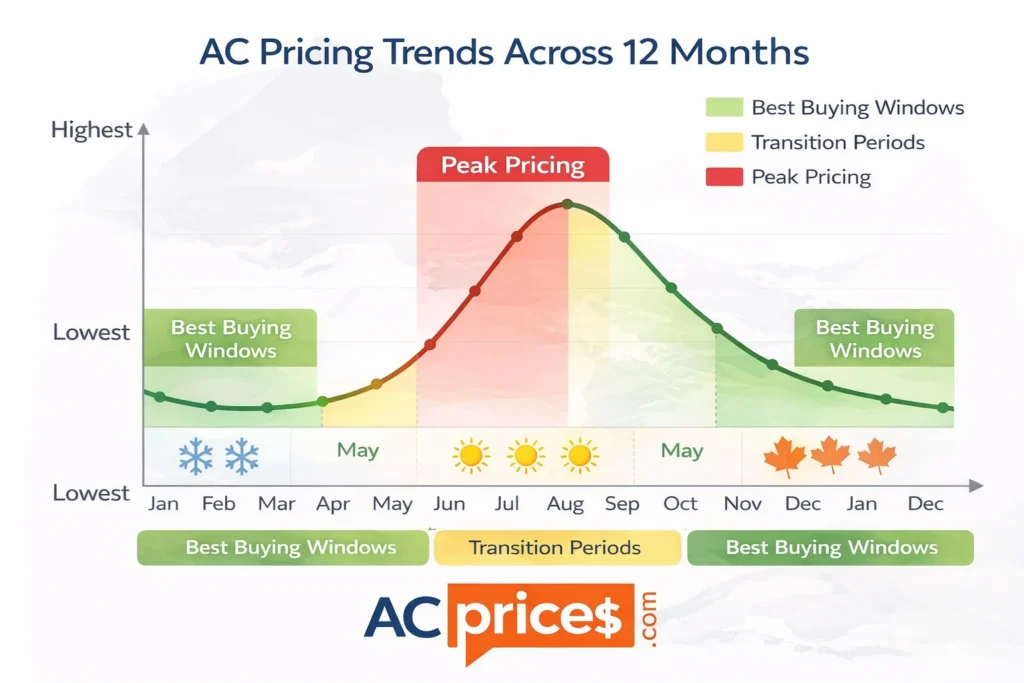
Demand-driven pricing is the primary factor. During peak summer months—especially June through August—HVAC contractors experience their busiest season. When demand surges, so do prices. Contractors can charge premium rates because homeowners facing sweltering temperatures are willing to pay more for immediate installation. Emergency replacements during heatwaves often cost 15–25% more than planned installations during slower periods.
Contractor availability also plays a crucial role. In off-peak months, HVAC companies have open schedules and compete more aggressively for business. This competition translates into better pricing, more flexible installation dates, and contractors who can dedicate more time to proper installation rather than rushing between jobs. You’ll also avoid the 2–3 week wait times common during summer emergencies.
Manufacturer incentives follow seasonal cycles too. Air conditioner brands typically launch rebate programs in late fall and early spring to keep factories running during slower months. These manufacturer rebates—often combined with provincial energy efficiency incentives—can reduce your total cost by $500 to $1,500 depending on the unit’s efficiency rating, reinforcing why these periods are often considered the Best Time to Buy AC Ontario.
Weather patterns in Ontario create unique timing opportunities. The province experiences cold winters that eliminate AC demand from November through March, followed by unpredictable spring weather and intense summer heat. This seasonal divide creates distinct “buyer’s markets” and “seller’s markets” throughout the year.
Cheapest Months to Buy AC in Ontario
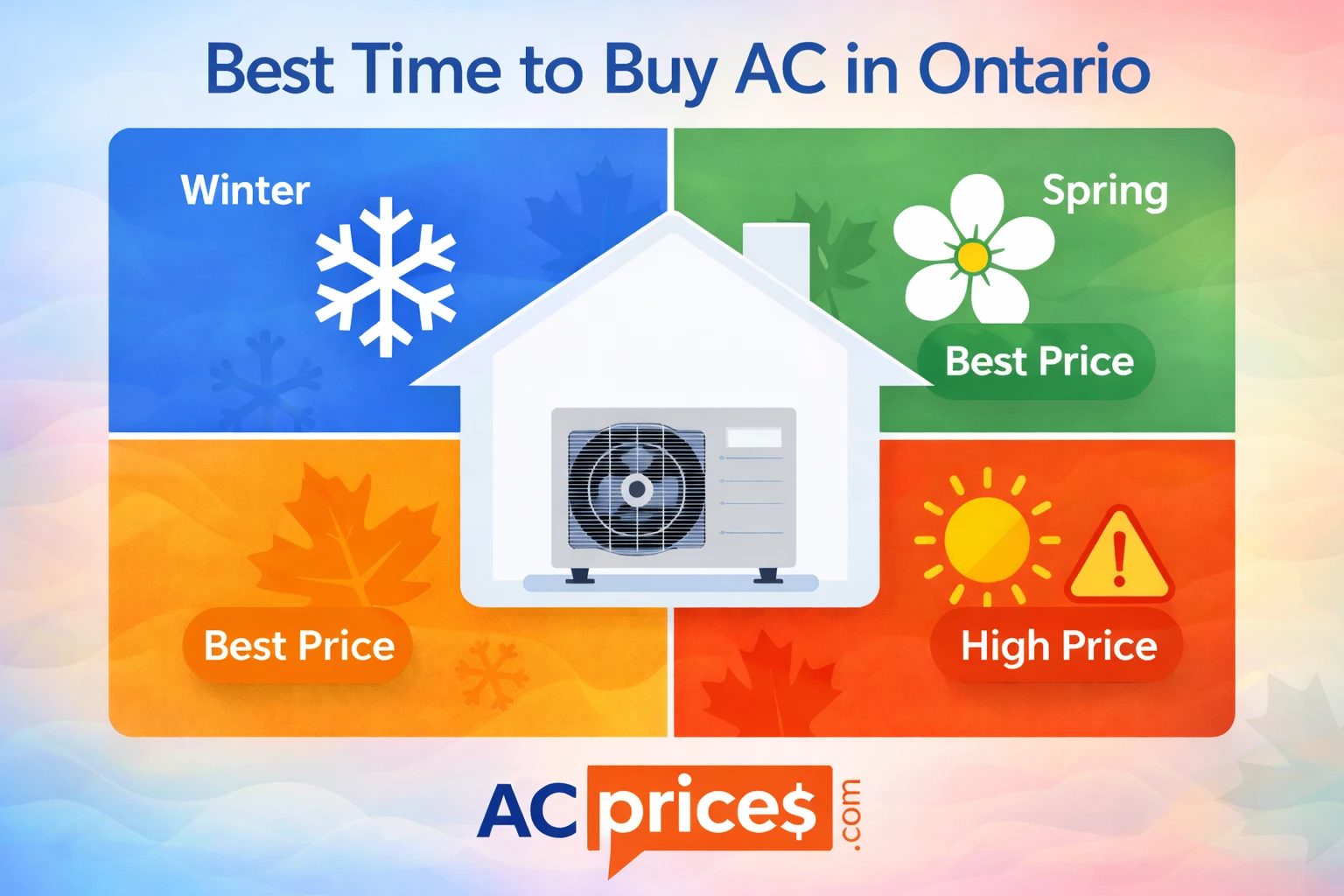
The best time to buy AC Ontario falls during three specific windows when prices hit their annual lows and contractors offer the most competitive rates.
Fall Season (September to November)
Late September through November represents the absolute cheapest time to purchase an air conditioner in Ontario and is widely considered theBest Time to Buy AC Ontario. After the summer rush ends, HVAC contractors enter their slowest period and actively discount equipment to maintain cash flow through winter.
During these months, you can expect:
Equipment discounts of 10–20% below summer pricing
More negotiating power on installation labor costs
Manufacturer clearance sales on current-year models
Zero wait times for installation
Contractors who can thoroughly assess your home’s needs without rushing
November is particularly advantageous because many manufacturers release year-end rebates to clear inventory before new models arrive in spring. Some Ontario HVAC companies also offer “winter booking discounts” if you purchase in fall but schedule installation for early spring.
Quick Takeaway (Ontario Homeowners): If your AC is 10+ years old, shopping between September and November gives you the lowest prices, the best contractor availability, and maximum leverage—without the pressure of summer heat.
If you want, I can align this with the earlier sections to control keyword density, or optimize it for a service-area landing page (Toronto, GTA, Ottawa, Windsor, etc.).
Early Spring (March to April)
March and April offer the second-best pricing window. Contractors know homeowners will soon need AC but aren’t desperate yet, creating a sweet spot where companies compete for early-season business without the summer premium.
Access to new model releases with updated efficiency features
Combined provincial and federal energy rebates that launch in spring
Comfortable installation weather for contractors
Time to test your system before extreme heat arrives
Many Ontario utilities and government programs refresh their rebate budgets in April, meaning you can stack manufacturer incentives with provincial energy credits. For high-efficiency systems (16+ SEER), these combined rebates can total $1,200 or more.
If your AC is over 10 years old, spring is the ideal window to start comparing quotes—before demand shifts and pricing premiums take effect.
Winter Months (December to February)
While winter installations are less common due to cold weather, December through February can offer rock-bottom pricing if you’re willing to plan ahead. Some contractors offer their deepest discounts during this dead zone to keep crews employed.
Winter considerations:
Lowest equipment pricing of the year (up to 25% off peak rates)
Flexible installation scheduling (book spring installation at winter prices)
Time to research and compare contractors without pressure
Opportunity to finance at promotional rates during holiday sales
The key with winter buying is separating the purchase from the installation. You can lock in equipment pricing in January and schedule installation for April or May when temperatures are more favorable.
Most Expensive Time to Replace AC in Ontario
Understanding when not to buy is equally important for Ontario homeowners looking to avoid overpaying.
Peak Summer (June to August)
June, July, and August represent the worst time to purchase an air conditioner in Ontario and are the opposite of the Best Time to Buy AC Ontario. When temperatures soar and existing systems fail, homeowners become desperate customers willing to pay whatever it takes for immediate relief.
Summer pricing penalties include:
Equipment markups of 15–25% above off-season prices
Premium labor charges due to high demand
Limited contractor availability (2–3 week wait times common)
Rushed installations with less attention to detail
Reduced negotiating leverage
Fewer equipment options as popular models sell out
Emergency replacements during heatwaves cost even more. If your AC dies on a 35°C July weekend, you’re at the contractor’s mercy. Some companies charge “emergency service fees” of $200–500 on top of already-inflated installation costs.
Late May
Many Ontario homeowners wait until the first hot spell in late May to think about AC replacement. By then, contractors’ schedules are filling rapidly, and the pre-season discounts have ended. You’ll pay near-peak prices without the extreme urgency of July, but you’ve missed the best buying windows.
Holiday Periods
While you might assume holiday weekends offer sales, most HVAC contractors in Ontario see reduced availability during long weekends in summer (Victoria Day, Canada Day, Civic Holiday). If your system fails during these periods, expect premium emergency rates and limited contractor options.
Seasonal Deals & Rebates in Ontario
Strategic buyers combine timing with available incentives to maximize savings on AC purchases.
Provincial Energy Efficiency Programs
Ontario’s energy rebate landscape changes periodically, but several programs consistently offer incentives for high-efficiency air conditioners:
Enbridge Gas Rebates
Available to Enbridge natural gas customers, these rebates provide $250–600 for central air conditioners with SEER ratings of 16 or higher. The exact amount depends on your unit’s efficiency level. You can check current offerings and eligibility at the Enbridge Gas Home Efficiency Rebate program.
What qualifies:
Central AC systems with 16+ SEER rating
Installation by licensed HVAC contractor
Enbridge natural gas customer in good standing
What doesn’t qualify:
Window or portable AC units
Systems below 16 SEER
DIY installations
Canada Greener Homes Grant
This federal program offers up to $5,000 for home energy upgrades, including qualifying air conditioning systems when part of a comprehensive retrofit. The AC component typically covers $1,000–1,500.
Municipal Utility Programs
Some Ontario municipalities offer additional local rebates through their electricity utilities. Toronto Hydro, for example, has offered seasonal AC rebates in past years.
Manufacturer Rebates
Major AC brands launch promotional rebates several times annually. These typically appear:
Spring launch promotions (March–April): $200–500 per unit
Fall clearance rebates (September–October): $300–800 per unit
Year-end inventory clearance (November–December): Up to $1,000 on select models
Premium manufacturers like Carrier, Lennox, and Trane often provide higher rebates on their top-tier systems during off-peak months.
Contractor Promotions
Individual HVAC companies in Ontario frequently run their own promotions independent of manufacturer deals. Common contractor offers include:
Free thermostats with installation ($150–300 value)
Discounted maintenance plans
Referral credits
Financing promotions (0% interest for 12–24 months)
Package deals (AC + furnace bundles save 10–15%)
The best strategy is stacking incentives: purchase a high-efficiency unit during a manufacturer rebate period, apply for provincial/federal rebates, and negotiate additional contractor discounts during off-peak months.
Buy Before Summer vs During Heatwave: The Real Cost Difference
The financial and practical differences between proactive and reactive AC purchasing are substantial.
Buying Before Summer (April–May)
Financial advantages:
Average total cost: $4,000–6,500 installed
Access to pre-season discounts (8–12% savings)
Time to compare multiple quotes without pressure
Ability to choose optimal equipment for your home
Availability of financing promotions
Practical benefits:
Installation scheduled at your convenience
Thorough site assessment and proper sizing
Quality workmanship without rushed installation
System tested and adjusted before you need it
Peace of mind heading into summer
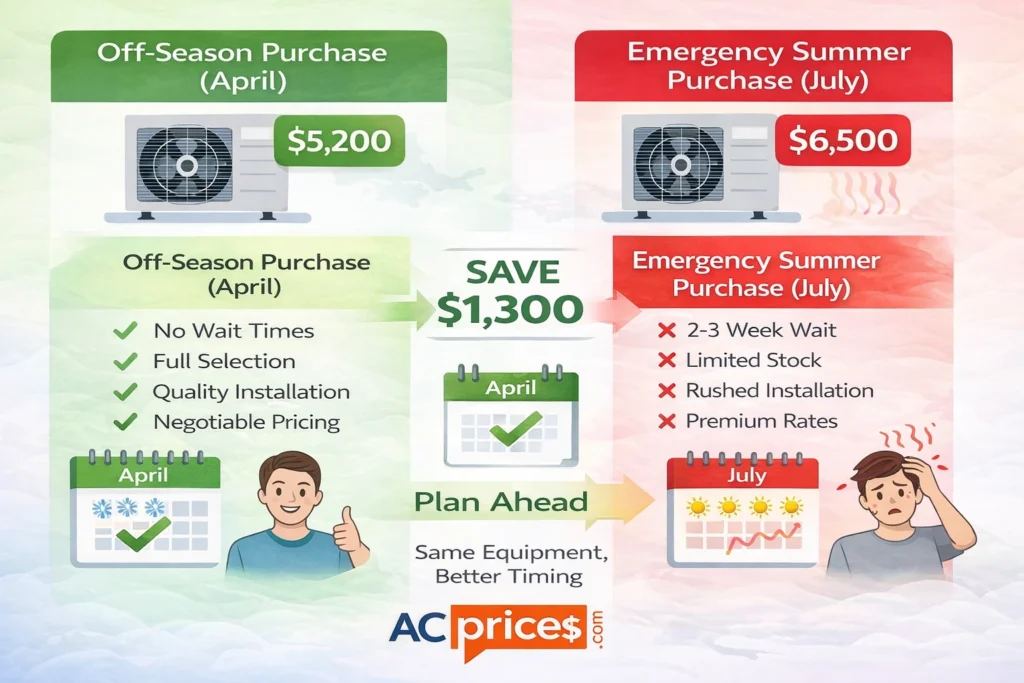
A homeowner purchasing a 3-ton, 16 SEER air conditioner in April 2026 might pay $5,200 installed with a contractor promotion and manufacturer rebate.
Buying During Heatwave (July–August)
Financial penalties:
Average total cost: $5,500–7,800 installed (same equipment)
No seasonal discounts available
Limited time to compare contractors
Forced to accept whatever’s in stock
Emergency service surcharges
Practical drawbacks:
Wait 1–3 weeks for installation during heat
Risk of improperly sized system due to rushed assessment
Less attention to installation details
Potential for unnecessary upsells
High stress during an uncomfortable period
That same 3-ton, 16 SEER system purchased as an emergency replacement in July might cost $6,400–6,800 installed—a premium of $1,200–1,600 for identical equipment.
The Maintenance Factor
Homeowners who plan ahead also avoid the emergency entirely. Annual AC maintenance in spring (costing $120–180) can identify failing components before complete system failure. Many breakdowns that occur during summer heatwaves could have been prevented with timely spring service, allowing for planned replacement during optimal pricing windows rather than emergency situations.
Does the Best Time to Buy AC Vary Across Ontario Cities?
While the general timing principles apply province-wide, local market dynamics create subtle variations worth considering.
Greater Toronto Area (GTA)
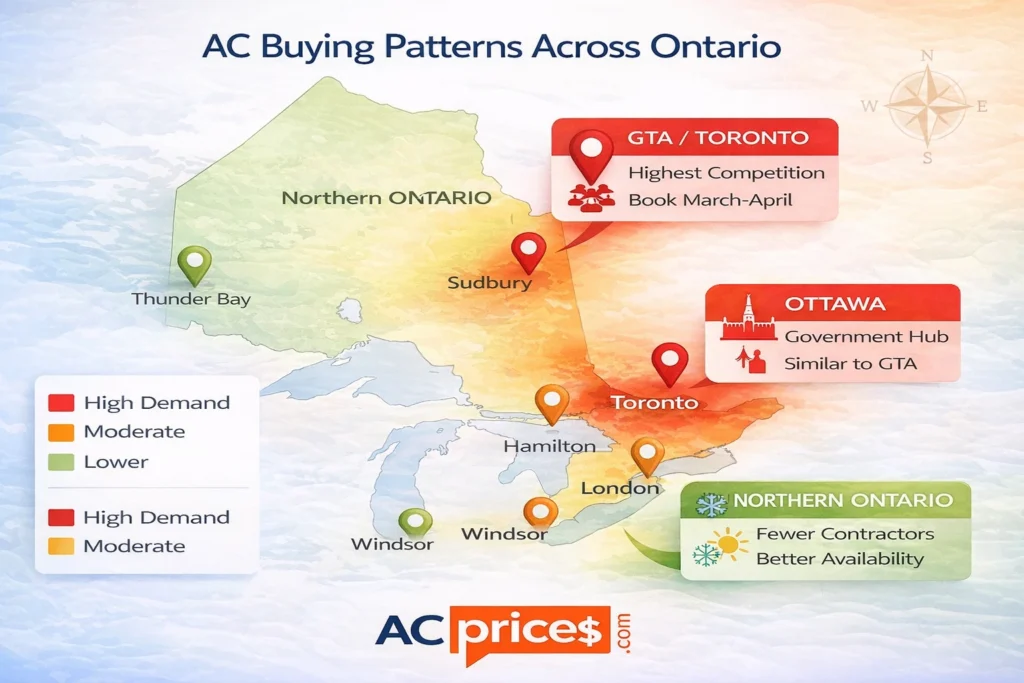
The GTA experiences the earliest demand surge in Ontario. Contractors’ schedules begin filling in late May rather than June, and summer pricing premiums kick in earlier. Toronto homeowners benefit most from purchasing in March–April before the rush, or waiting until September when competition among numerous contractors drives aggressive pricing.
The dense contractor market in Toronto, Mississauga, Brampton, and surrounding areas means more competitive off-season pricing but also higher peak-season premiums due to intense demand. Typical installation wait times: 3–5 days off-peak, 2–3 weeks during summer emergencies.
Ottawa Region
Ottawa follows similar patterns to Toronto but with slightly later seasonal transitions. The capital region’s government and professional workforce creates consistent demand for quality installations, making spring (March–April) particularly competitive for contractor attention.
Typical installation wait times: 4–7 days off-peak, 10–14 days during peak summer.
Hamilton and Southwestern Ontario
Hamilton, London, and Windsor markets show more moderate seasonal swings. Smaller contractor pools mean less dramatic price competition, but also more personalized service and flexibility during off-peak months. Fall remains the best buying window, with contractors eager to maintain steady work before winter.
Typical installation wait times: 2–4 days off-peak, 7–10 days during summer rush.
Northern Ontario
Sudbury, Thunder Bay, and northern communities have shorter AC seasons and fewer specialized contractors. While summer demand exists, it’s less intense than southern markets. Homeowners here often find better availability even during peak months, though equipment costs may be slightly higher due to transportation and smaller market volume.
Typical installation wait times: 1–3 days off-peak, 5–7 days during peak periods.
Local Strategy: Urban homeowners (Toronto, Ottawa) should prioritize early booking during off-peak windows. Rural and northern Ontario residents have more flexibility but should still avoid July–August for optimal pricing.
Common Mistakes Ontario Homeowners Make
Avoid these timing errors that cost hundreds or thousands in unnecessary expenses:
Waiting for visible failure: Most homeowners replace AC units only after complete breakdown. By then, you’re forced into peak-season emergency pricing. If your system is 12+ years old, plan proactive replacement during off-peak months.
Assuming winter means no installation: While outdoor temperatures affect installation comfort, modern HVAC professionals can install air conditioners in cold weather. The equipment itself doesn’t need warm temperatures—only the installation process is slightly more challenging.
Missing rebate deadlines: Provincial and manufacturer rebates often have application deadlines or funding limits. Research available incentives before purchasing, and submit applications promptly after installation.
Choosing the wrong contractor: Off-peak seasons give you time to properly vet contractors, check references, and verify licensing. Rushed summer decisions often lead to choosing the first available company rather than the best qualified.
Focusing solely on equipment cost: The cheapest unit isn’t always the best value. Consider efficiency ratings (higher SEER saves on electricity), warranty coverage, and contractor reputation. A well-installed mid-tier system outperforms a poorly-installed premium unit.
How to Maximize Your Savings
Follow this strategic approach to get the best possible price on your Ontario AC purchase:
Start planning 6–8 months ahead: If you know your AC is aging (10+ years old), begin researching in winter for spring installation. This timeline allows you to compare contractors, understand rebate programs, and wait for optimal pricing windows.
Get multiple quotes during off-peak: Obtain 3–4 written quotes from licensed contractors in March–April or September–October. You’ll see significant price variation and can negotiate better terms when contractors know you’re comparing options.
Ask about financing: Many manufacturers and contractors offer 0% financing for 12–24 months during promotional periods. This can make higher-efficiency systems more affordable by spreading costs without interest.
Consider package deals: If your furnace is also aging, ask about HVAC system bundles. Contractors often discount combined installations by 10–15% compared to separate purchases.
Verify all available rebates: Before finalizing your purchase, confirm current provincial, federal, and manufacturer incentives. An HVAC contractor should help identify and apply for these rebates. Check resources like Natural Resources Canada’s energy efficiency programs and Enbridge Gas rebates for the latest offerings.
Prioritize proper installation: The best equipment performs poorly if improperly installed. Choose contractors based on reputation, certification, and installation practices—not just the lowest price. Quality installation pays dividends in system longevity and efficiency.
Which Buying Window Is Right for You?
Different homeowner situations call for different timing strategies. Here’s how to match your circumstances with the optimal buying window:
If your AC is 12+ years old and showing issues: Buy in September–November, schedule installation for spring. This approach delivers maximum savings, zero stress, and ensures you’re ready before summer heat arrives.
If you’re planning new construction or renovation: Buy in March–April when contractors have capacity for detailed planning, custom ductwork, and coordinated installation schedules with other trades.
If your system is 8–10 years old and working fine: Schedule annual maintenance now to extend system life, then plan replacement for the next off-season window (fall or early spring). This proactive approach avoids emergency situations entirely.
If your AC just died in July: Request multiple emergency quotes, ask about fall pricing credits for delayed installation, and consider temporary cooling solutions if wait times exceed 2 weeks. Some contractors offer “emergency now, discount later” programs where you pay premium rates for immediate temporary service but lock in off-season pricing for permanent installation in September.
Frequently Asked Questions
What is the absolute cheapest month to buy an air conditioner in Ontario?
November typically offers the lowest prices because it combines end-of-season contractor availability, year-end manufacturer clearance sales, and zero demand competition. You can purchase equipment in November at rock-bottom prices and schedule spring installation, capturing the best of both timing advantages.
Can I really save money buying AC in winter?
Yes, winter equipment purchases can save 15–25% compared to summer pricing. The key is separating the purchase timing from installation timing. Buy and lock in pricing during winter months (December–February), then schedule installation for April or May when weather is more favorable and contractors can work efficiently.
Are there AC rebates available year-round in Ontario?
Provincial energy efficiency rebates like Enbridge Gas incentives are typically available throughout the year, though funding can be limited. Manufacturer rebates are seasonal, with the largest promotions in spring (March–April) and fall (September–October). Federal programs like Canada Greener Homes Grant have ongoing enrollment but may have budget limitations.
How much more expensive is emergency AC replacement?
Emergency replacements during peak summer typically cost 20–30% more than planned off-season installations. For a system that would cost $5,000 installed in April, you might pay $6,000–6,500 for the same equipment in July, plus face wait times of 1–3 weeks during extreme heat.
Should I wait for Black Friday or Boxing Day AC sales?
While some HVAC contractors offer November/December promotions, AC-specific deals are less common during these retail holidays compared to fall clearance sales in September–October. If you see a legitimate Black Friday AC promotion, it’s worth considering—but verify the total installed price, not just equipment discounts.
Conclusion
The best time to buy AC Ontario is during off-peak seasons—specifically late September through November or early March through April—when contractor availability is high, demand is low, and manufacturer rebates are plentiful. By timing your purchase strategically, you can save $1,000–2,000 compared to emergency summer replacements while gaining access to better equipment options, more thorough installation, and superior customer service.
Don’t wait until the first heatwave forces your hand. If your air conditioner is 10+ years old or showing signs of declining performance, start planning now. A proactive approach means comfortable summers, lower installation costs, and the peace of mind that comes from making an informed decision without pressure.
If your AC is 10+ years old, now is the ideal time to compare prices—before summer demand resets the market. Ready to explore your options? Check current AC prices and available rebates in your Ontario city by requesting quotes from licensed contractors during the next off-season window. Your wallet—and your summer comfort—will thank you.
Need Help Choosing the Right AC?
Have questions about selecting or sizing your next air conditioner? Our expert-backed guides and local contractor directory can help you make a confident decision. Visit acprices.ca to learn more or request free quotes from certified installers near you.
📌 When Are You Planning to Install a New AC?
Let us know your preferred timeline so we can match you with the right local professionals:
Our network of certified contractors covers most major Canadian regions, offering support whether you’re replacing an older system or evaluating new AC models.
 Canadian