
How Central Air Conditioners Work: A Complete Guide for Canadian Homeowners

Understanding how your home’s central air conditioners work isn’t just useful—it’s empowering. Whether you’re using a traditional system or upgrading to a more energy-efficient option like an LG Ductless Heat Pump, knowing what goes on behind the scenes can help you recognize when something’s off, schedule maintenance at the right time, and make smarter choices if you ever need a replacement.
In this comprehensive guide, we’ll explain how a central air conditioning system functions, the key components that make it work, and why proper installation and upkeep matter. You’ll also find helpful insights on sizing, energy efficiency, and cost-saving tips that apply to Canadian homes.
Why Central Air Conditioning Is So Popular in Canada
Central air conditioners remain one of the most effective ways to keep your entire home cool during Canada’s warm and often humid summers. While not every household across the country needs one, around 70% of Canadian homes with air conditioning rely on a central system.
These systems provide consistent cooling throughout the home, manage indoor humidity, and help filter the air you breathe. In provinces like Ontario—where summer temperatures often soar above 30°C and the humidity can be intense—a central air conditioner offers more than just comfort; it provides real relief. For homes without existing ductwork or for those seeking energy-efficient alternatives, an LG Ductless Heat Pump can be a smart and flexible option.
But how does this system actually work? How does it pull heat from your home and replace it with cool, refreshing air in every room? Let’s break it down.
Split Systems vs. Packaged Systems
There are two main types of central air conditioning systems: split systems and packaged systems. Both operate on the same basic principle—extracting heat from indoor air and releasing it outdoors—but their setup is slightly different.
Split Systems
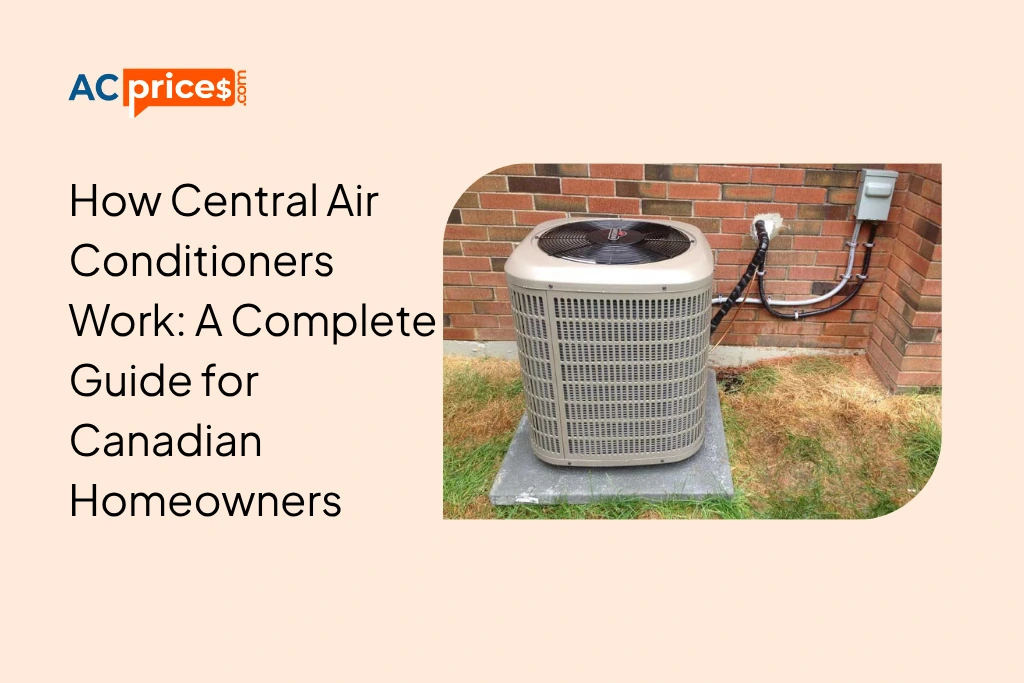
Most Canadian homes use split systems. These are called “split” because the components are divided between an outdoor unit and an indoor one, connected by refrigerant lines.
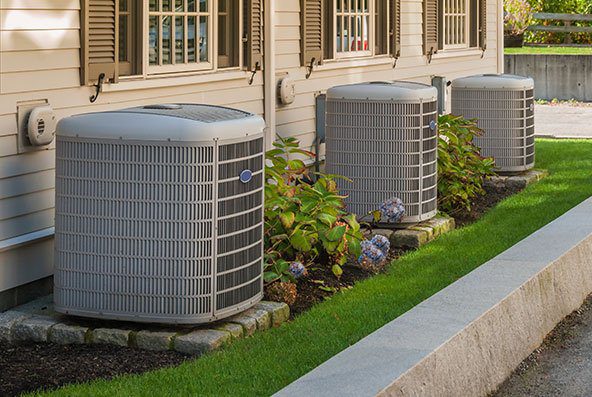
- The outdoor unit houses the compressor, condenser coil, and a fan.
- The indoor unit contains the evaporator coil and blower, which push cool air through the ducts.
This configuration makes split systems highly efficient for residential applications and ideal for homes that already have a forced-air furnace and ductwork in place.
Packaged Systems
In contrast, packaged systems house all components—compressor, condenser, and evaporator—in a single outdoor unit. These are less common in homes but more frequently used in commercial spaces or certain small buildings, such as hotels, where each room has its own system mounted through the exterior wall.
While packaged systems can be practical for tight or specialized spaces, most Canadian homeowners prefer split systems due to their compatibility with existing heating and ventilation infrastructure. For those looking for even more flexibility—especially in homes without ductwork—an LG Ductless Heat Pump can offer a modern, energy-efficient alternative with zoned comfort and easy installation.
Other Cooling Options for Homes Without Ductwork
Not all homes are built with ducts, especially older properties or those that use radiant or baseboard heating. For those situations, ductless mini-split systems or ductless heat pumps are excellent alternatives.
These systems have:
- An outdoor compressor unit.
- One or more indoor air-handling units (sometimes called “heads”) that deliver cool air directly into rooms.
Ductless mini-splits are popular in homes without central heating ducts and are often used to cool specific areas or additions. They’re also energy-efficient and can provide both heating and cooling in one compact system—making them a versatile choice for many Canadian climates. A leading option in this category is the LG Ductless Heat Pump, known for its reliability, energy efficiency, and ability to deliver year-round comfort without the need for ductwork.
For smaller spaces, window or portable air conditioners can also serve as budget-friendly, temporary solutions, though they can’t match the comfort, quietness, or efficiency of a full central system.
Can You Install a Split System in Your Home?
A central air conditioning system relies on the infrastructure of a forced-air furnace. That means it uses your existing ducts, vents, and furnace blower to circulate cooled air throughout your home. In contrast, an LG Ductless Heat Pump offers an efficient alternative for homes without ductwork, delivering both heating and cooling without the need for a traditional furnace or ventilation system.
If your home already has a forced-air heating system, adding central air conditioning is usually straightforward and cost-effective.
However, if your home is heated using radiators, baseboard heaters, or in-floor heating, you likely don’t have ductwork. In that case, a ductless mini-split or multi-zone system may be the better option for efficient cooling.
How a Central Air Conditioner Works: Step-by-Step
Let’s look at how your air conditioning system actually cools your home.
1. Monitoring the Indoor Temperature
The process begins with the thermostat, which continuously measures your home’s indoor temperature. When it detects that the room has warmed up beyond your set temperature, it signals the system to start the cooling cycle.
2. Drawing in Warm Air
Your system’s return air ducts pull in warm air from various parts of your home. Before moving further, the air passes through a filter, which removes dust, pet dander, pollen, and other contaminants—helping to improve indoor air quality.
3. Cooling the Air
The filtered air then flows over the evaporator coil, located inside the indoor unit. This coil is filled with a cold liquid refrigerant that absorbs heat from the air, cooling it down in the process. As the refrigerant absorbs the heat, it changes from a liquid into a gas.
4. Distributing Cool Air
Once the air has been cooled, the blower fan pushes it through the home’s ductwork and out through the supply vents in each room. This is the refreshing, chilled air you feel when the A/C is running.
5. Releasing Heat Outdoors
The now-warmed refrigerant travels from the indoor coil to the outdoor unit, where the compressor pressurizes it. The refrigerant then moves through the condenser coil, where outdoor air absorbs the heat, turning the refrigerant back into a liquid.
6. Cycle Completion
Once cooled, the refrigerant returns indoors to repeat the process. The cycle continues until the thermostat detects that the desired temperature has been reached, at which point it signals the system to shut off.
The Key Components of a Central Air Conditioner
A central air conditioning system is made up of several important parts that all work together to deliver consistent cooling.
Major Components
- Compressor – The heart of the system, responsible for pressurizing the refrigerant and moving it through the system.
- Condenser Coil – Releases the heat collected from inside your home to the outdoors.
- Evaporator Coil – Absorbs heat from the indoor air to cool it down.
- Blower Fan – Circulates the cooled air through the ducts and vents.
Supporting Components
- Thermostat – Controls when the system starts or stops based on temperature settings.
- Filter – Traps dust and debris to keep your air cleaner and system efficient.
- Refrigerant Lines – Carry the refrigerant between the indoor and outdoor units.
- Ductwork and Vents – Deliver the cooled air throughout your home and return warm air back to the system.
Together, these components ensure smooth and efficient operation throughout the summer months.
Compressor Types: Single-Stage, Two-Stage, and Variable-Speed
The compressor is one of the most critical elements in determining an air conditioner’s performance and efficiency. Here’s how the three main types differ:
Single-Stage
A single-stage compressor only has two settings—On and Off. When cooling is needed, it runs at full power until the thermostat turns it off. While simple and affordable, these units are less efficient, tend to use more electricity, and don’t regulate humidity or temperature as precisely.
Two-Stage
A two-stage compressor operates at two different speeds—a high and a low setting. The lower speed handles mild cooling needs efficiently, while the higher speed activates during hotter days. This design allows for longer, quieter operation and better energy savings compared to single-stage units.
Variable-Speed
Variable-speed compressors are the most advanced option. They can adjust their speed in small increments to maintain consistent indoor temperatures. Because they rarely run at full power, they’re exceptionally quiet, energy-efficient, and great at removing humidity from the air.
Measuring Energy Efficiency: What SEER Means
Air conditioner efficiency is measured using the Seasonal Energy Efficiency Ratio (SEER). This rating compares how much cooling output the unit provides relative to the energy it consumes.
- A higher SEER rating means greater efficiency and lower energy costs.
- However, units with very high SEER ratings are also more expensive upfront.
In Canada, modern air conditioners typically range from 13 to 30 SEER. For most homeowners, a model in the 16–18 SEER range offers the best balance of affordability and performance.
Older systems—especially those over 10 years old—may only have SEER ratings of 8 to 10, meaning they use significantly more energy.
Rebates and Energy Programs
Many provinces, including Ontario, offer rebates and incentives for upgrading to ENERGY STAR® certified systems. These programs can help offset the cost of a new unit while reducing your long-term utility bills.
How to Lower Cooling Costs Without Sacrificing Comfort
Even with an efficient air conditioner, you can take additional steps to reduce your energy consumption:
- Install a programmable or smart thermostat: Adjust temperatures automatically based on your schedule or control them remotely through your smartphone.
- Replace filters regularly: A clogged filter can block airflow, making your system work harder. Change filters every 1–3 months depending on the type.
- Schedule annual maintenance: A yearly tune-up keeps your system running efficiently and can prevent costly breakdowns.
- Use ceiling fans: Circulating air helps rooms feel cooler, allowing you to raise your thermostat setting slightly.
- Keep the fan set to “Auto”: Leaving it on “On” makes it run constantly, increasing both energy use and indoor humidity.
Small adjustments like these can lead to noticeable savings on your summer energy bills.
Sizing Your Central Air Conditioner Properly
When it comes to air conditioning, bigger isn’t always better. The system must be properly sized to your home’s needs, typically measured in British Thermal Units (BTUs)—a standard unit that represents the amount of energy required to raise one pound of water by one degree Fahrenheit.
If Your System Is Too Small
An undersized air conditioner will struggle to keep up with demand, running constantly without adequately cooling your home. This leads to higher wear and tear and reduced lifespan.
If Your System Is Too Large
An oversized unit cools the home too quickly, causing frequent on-off cycles that waste energy and leave humidity unbalanced.
Proper Sizing Factors
Determining the right size involves more than just square footage. HVAC professionals also consider:
- Number of rooms and layout of the home.
- Size, type, and placement of windows.
- Level of insulation.
- Orientation of the home (north- or south-facing).
- Nearby heat sources, both indoors and outdoors.
The best way to get accurate sizing is through a professional HVAC load calculation performed by a certified contractor.
Common Central Air Conditioner Problems
Even with regular maintenance, you may occasionally run into issues. Knowing what could go wrong helps you recognize when to call for service before small problems become big ones.
Frequent Issues Include:
- Dirty or clogged filters – restrict airflow and reduce cooling performance.
- Refrigerant leaks – cause insufficient cooling and can damage the compressor.
- Frozen evaporator coils – often due to poor airflow or low refrigerant.
- Water leaks – from blocked condensate drain lines.
- Thermostat malfunctions – lead to inaccurate temperature readings.
- Damaged compressors or fans – can stop the system from cooling altogether.
If you notice reduced airflow, warm air coming from vents, or strange noises, it’s best to schedule a service call. Attempting major repairs yourself can be risky and may void your warranty.
Extending the Life of Your Air Conditioner
To get the most out of your investment, consistent professional maintenance is key. A well-maintained central air conditioner can last 15 to 20 years or longer.
Annual inspections allow a licensed technician to:
- Clean the coils and blower components.
- Check refrigerant levels.
- Inspect electrical connections and safety controls.
- Lubricate moving parts.
- Ensure overall system efficiency and safety.
Preventive maintenance not only saves money in the long run but also ensures steady comfort throughout the cooling season.
Professional Installation Matters
Installing a central air conditioner isn’t a simple DIY project. Proper installation impacts everything from performance and lifespan to energy efficiency. A certified HVAC technician will:
- Match the system’s capacity to your home’s requirements.
- Properly seal refrigerant lines and ducts.
- Calibrate the thermostat and controls.
- Verify safe electrical connections.
Professional installation ensures your system runs efficiently from day one and helps maintain your warranty coverage.
FAQs About Central Air Conditioners
Is a central air conditioner better than a window or portable unit?
Central air conditioners are usually quieter, more efficient, and provide even cooling throughout your entire home. Window and portable units are convenient for small spaces or renters but can’t match the performance, filtration, or smart control options of central systems.
Can an air conditioner remove viruses or bacteria from the air?
Standard air conditioners don’t kill viruses or bacteria, but they can help circulate cleaner air when combined with high-efficiency or UV filters. For better indoor air quality, consider using additional filtration or air purification systems.
Final Thoughts
Central air conditioners are an investment in both comfort and long-term home value. Understanding how they work helps you make informed decisions about maintenance, energy efficiency, and future upgrades.
If you’re thinking about installing or replacing a central air conditioner, it’s always wise to consult with a certified HVAC professional. They can help assess your home, recommend the right size, and ensure proper installation for optimal performance.
Have questions about choosing the right air conditioner for your home?
Explore expert guides and compare systems on acprices.ca or visit Natural Resources Canada – Energy Efficiency to learn energy-saving tips and make informed decisions for comfort and efficiency.