A baseboard heater is often one of the first heating options Canadians encounter—especially in condos, apartments, and older homes—and understanding its true cost and efficiency can save you thousands over time.
This guide is written for Canadian homeowners, renters, and property managers who want clear, experience-driven answers about how baseboard heaters work, what they cost to run, and when they actually make sense.
Drawing on real-world heating data and Canadian climate realities, you’ll learn whether baseboard heating is right for your space—and what smarter upgrade paths exist.
Baseboard Heaters in Canada — How They Work & What to Expect
What Is a Baseboard Heater?
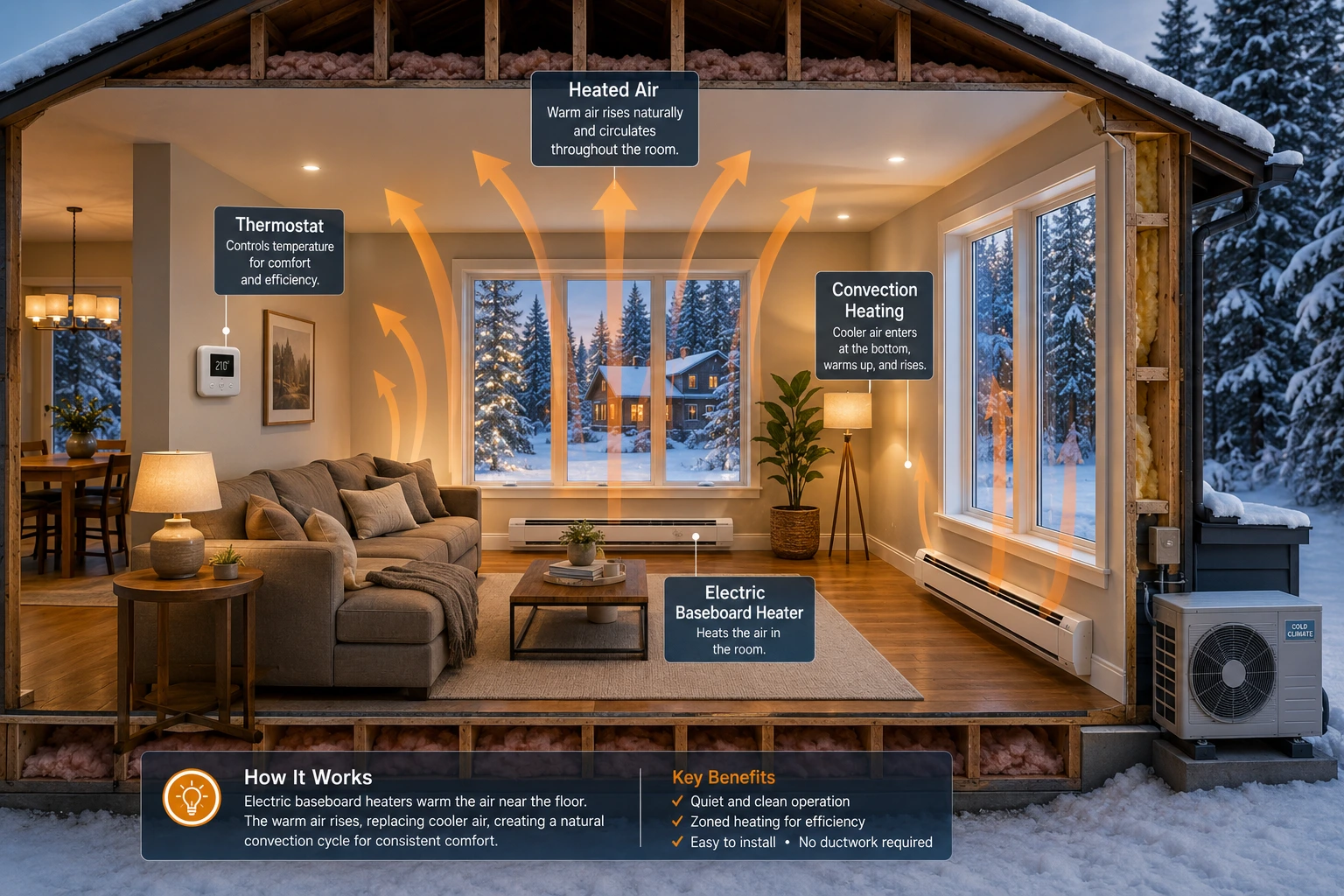
A baseboard heater is a space heating system installed along the base of interior walls. It warms air locally and relies on natural convection to circulate heat through a room.
Two main types are common in Canada:
Electric baseboard heaters
Use resistance heating
Most common in condos and rentals
Each unit is independently controlled
Hydronic (hot water or oil-filled) baseboard heaters
Use heated fluid inside the unit
More consistent warmth
Usually tied to a boiler system
What Size Baseboard Heater Do You Need?
Electric baseboard heaters are sized by wattage, using a general rule of 10 watts per square foot for well-insulated rooms. Poorly insulated rooms or spaces with high ceilings need more.
Room Size
Well-Insulated (10 W/sq ft)
Poorly Insulated (12 W/sq ft)
High Ceilings (15 W/sq ft)
50 sq ft
500 W
600 W
750 W
75 sq ft
750 W
900 W
1,125 W
100 sq ft
1,000 W
1,200 W
1,500 W
150 sq ft
1,500 W
1,800 W
2,250 W
These are general planning guidelines — a licensed electrician can confirm exact requirements based on your home’s insulation and layout.
Why Baseboard Heaters Are So Common in Canadian Homes
Baseboard heaters became popular across Canada because they:
Are inexpensive to install initially
Require no ductwork
Work well in cold climates for zoned heating
Are simple for builders to include in multi-unit housing
In many provinces, electricity was historically affordable, making electric baseboard heating an easy default—especially in high-rise buildings.
Baseboard Heater Cost in Canada (What You’ll Really Pay)
Upfront Unit Cost
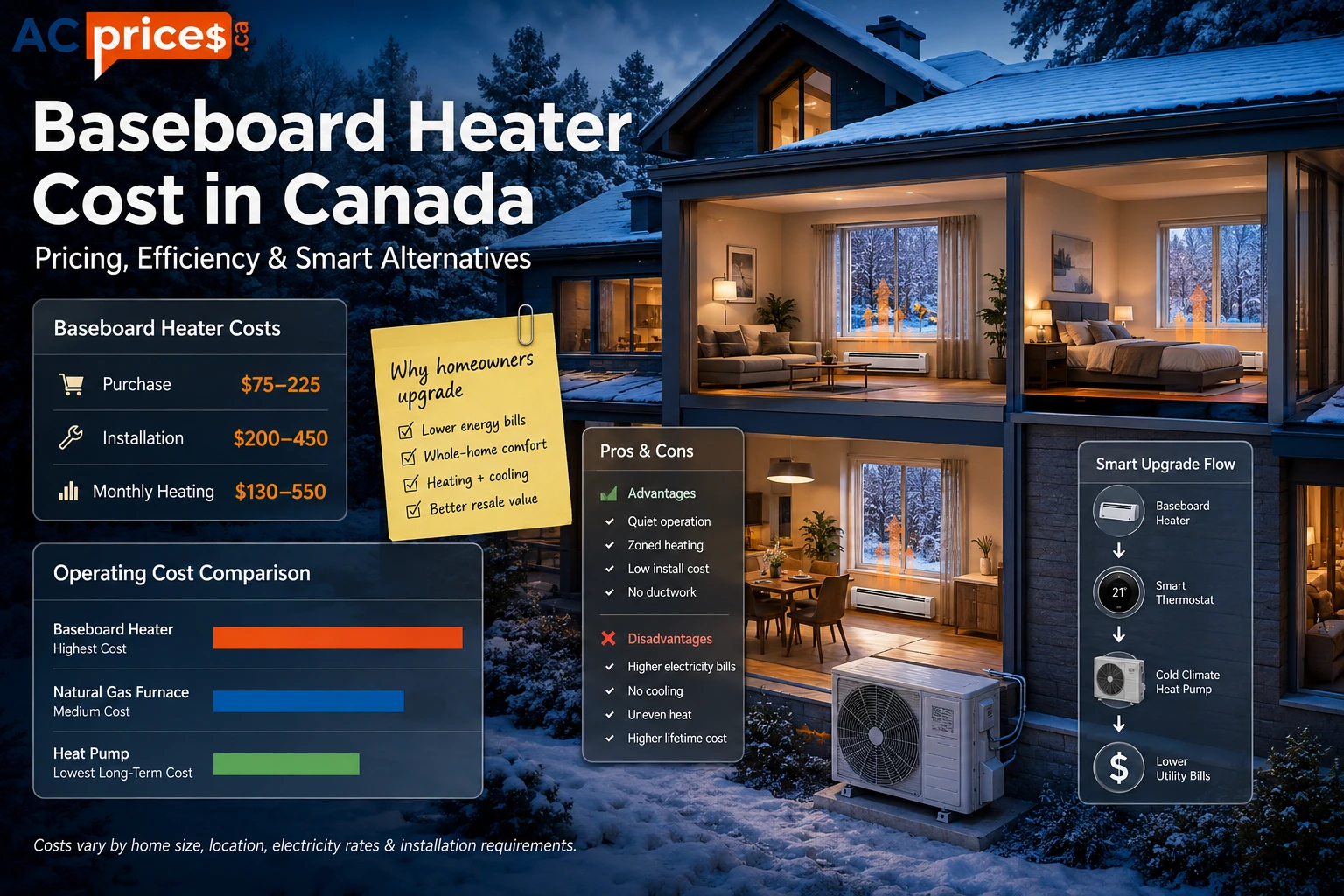
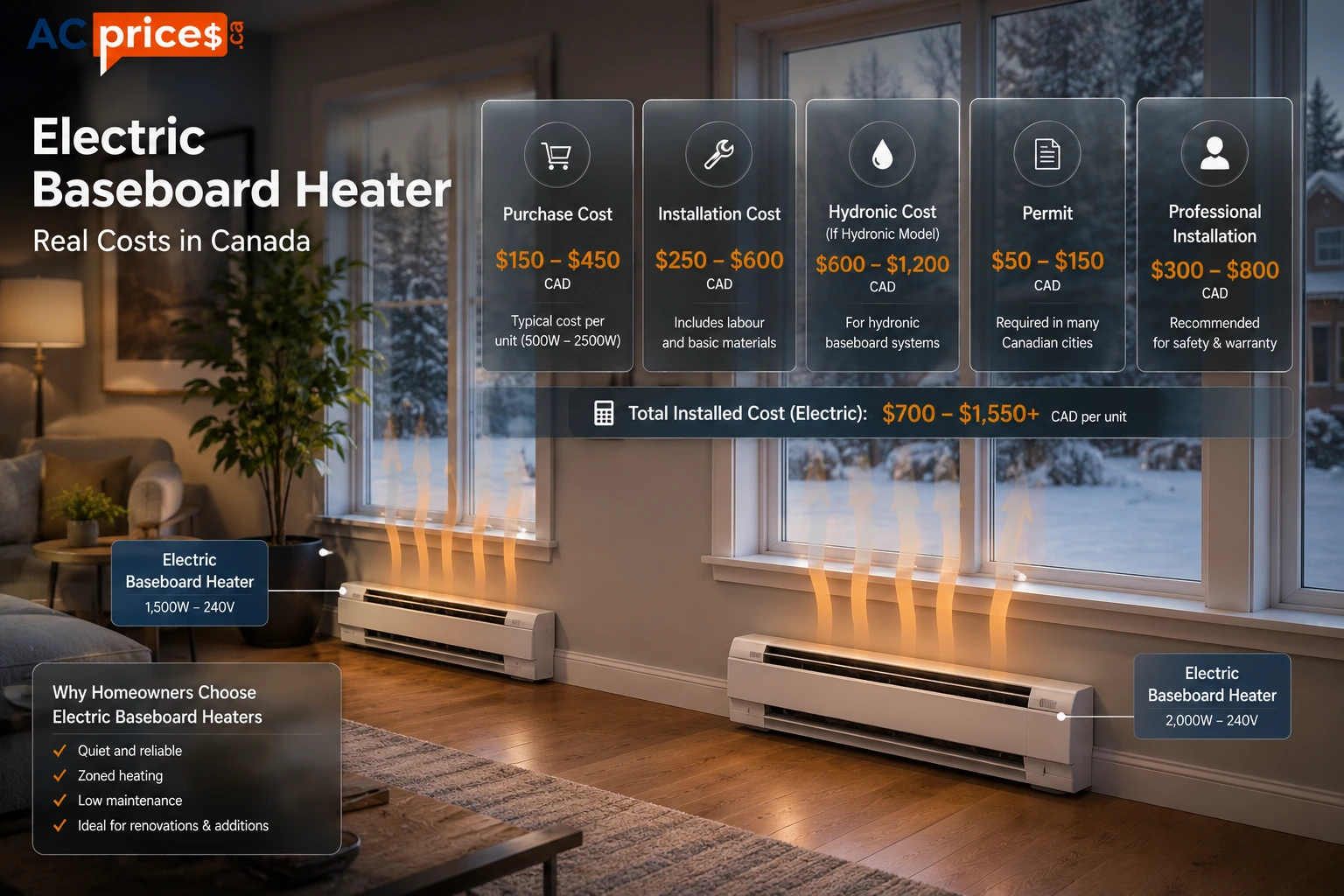
Electric baseboard heater: Prices typically fall between $75 and $225 per unit, depending on wattage, length, brand, and thermostat compatibility.
Hydronic baseboard heater: Costs are commonly seen between $400 and $850 per unit, influenced by system type and boiler integration.
Actual pricing can vary by region, supplier, and product specifications.
Installation Cost
Electric baseboard heater installation: Installation costs may range between $200 and $450 per unit, depending on electrical work required and local labour rates.
Hydronic baseboard heater installation: Costs often fall between $600 and $1,400 per heating zone, particularly when connected to an existing boiler system.
Electric systems generally have lower upfront installation costs, which explains their widespread use in condos and apartments—though operating costs tend to be higher over time.
A Note on Permits
Many Canadian municipalities require an electrical permit for baseboard heater installation, particularly when the job involves a new dedicated circuit or a panel upgrade. Permit costs vary by city, so it’s worth confirming requirements with your local building department or licensed electrician before work begins.
Monthly Electricity Cost (Seasonal Reality Check)
During Canadian winters, baseboard heater operating costs can vary significantly based on climate and home efficiency:
Small condo or apartment (approx. 600–800 sq ft): Monthly heating costs may fall between $130 and $230 during peak winter months.
Townhome or older single-family home: Monthly costs commonly range between $280 and $550, especially in colder regions or poorly insulated homes.
Actual electricity usage depends on:
Provincial electricity rates
Insulation and window efficiency
Thermostat settings and occupancy patterns
For homeowners evaluating overall household energy expenses, reviewing AC running cost in Canada can help put heating-related electricity use into a broader annual context.
How to Calculate Your Own Baseboard Heater Cost
You can estimate your exact cost with a simple formula:
Daily Cost = (Wattage ÷ 1000) × Hours Used × Price per kWh
For example, a 1,500-watt baseboard heater running 8 hours a day on Ontario’s average residential rate of roughly 13¢/kWh works out to:
(1,500 ÷ 1000) × 8 × $0.13 = $1.56 per day, or about $47/month for that single unit. A typical home running several units simultaneously through peak winter will land within the monthly ranges above.
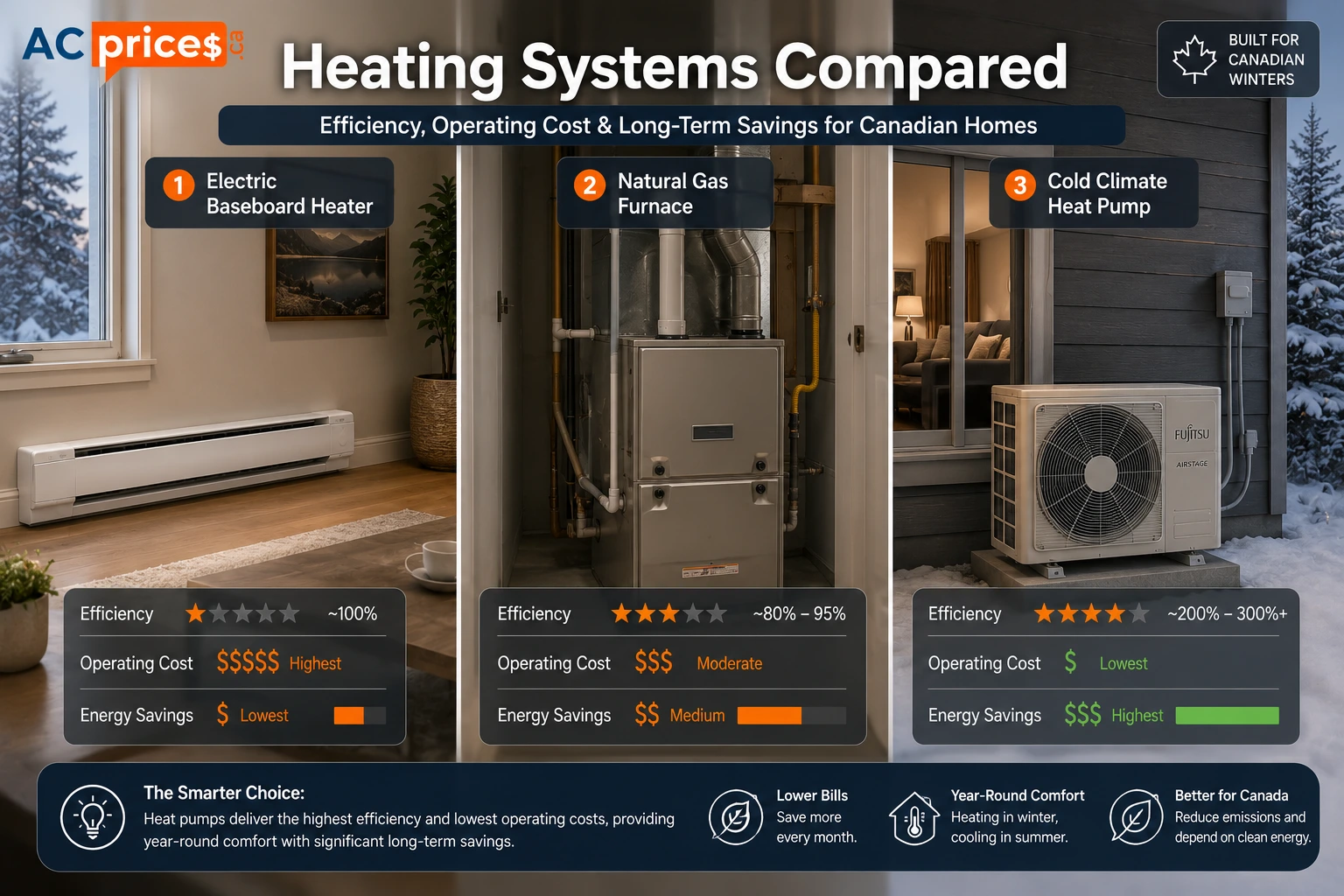
According to Natural Resources Canada, electric resistance heating is considered one of the higher-cost long-term heating options in cold climates when compared to gas or heat pump systems.
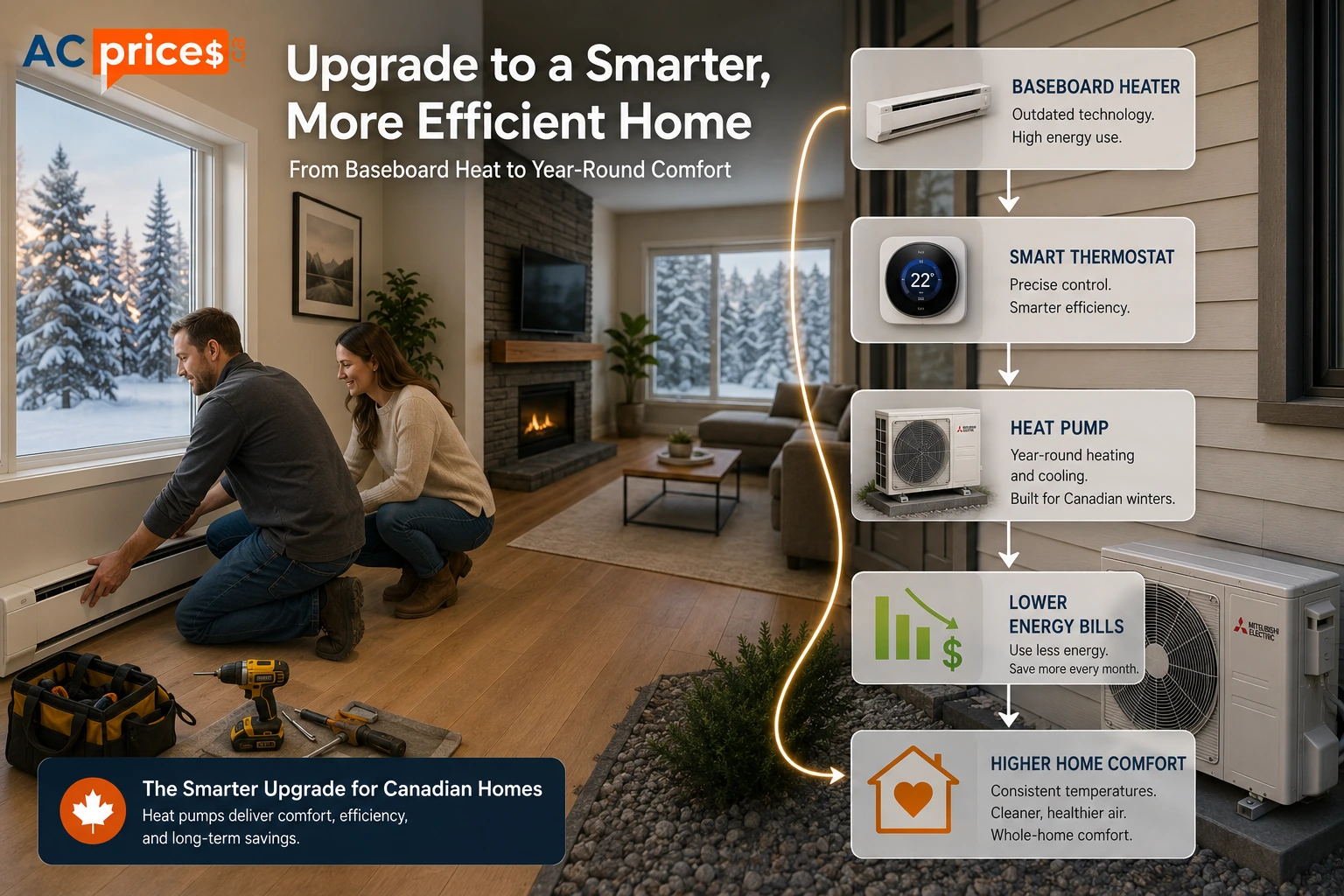
If your home already has baseboard heaters, upgrades don’t have to be all-or-nothing—hybrid systems are increasingly common.
Should You Replace a Baseboard Heater or Keep It?
If your winter bills exceed $250/month, your home is larger than 900 sq ft, or you need cooling, replacement is usually worth exploring. If you live in a small condo or rental, smart controls may be enough.
Step 1 of 70%
❄️
Air Conditioner Cost Calculator
How much is adding or upgrading your existing A/C going to cost? Get a new air conditioner price estimate instantly with this short quiz.
What size AC unit do you need (tons)?
1 ton = 12,000 BTU. Most homes need 2–3 tons.
2.5 tons
1 tons5 tons
Which efficiency rating do you prefer (SEER)?
Higher SEER = more efficient = lower energy bills, but higher upfront cost.
Do you need additional ductwork installation?
Do you need installation included?
Do you want a smart thermostat included?
Do you want noise reduction upgrade?
Would you like to receive a free no-obligation estimate from our local contractor partners as well?
Great! Almost done, your result is on the next page.
Please enter your contact details so our Certified contractors can provide estimates as well.
This field is required.
Please enter a valid email address.
Please enter your phone number.
Please enter your city or postal code.
By submitting this form, you are giving your consent to receive phone calls and text messages from our contractor partners.
You're almost done!
Please provide your details to see your results.
Name is required.
Email is required.
Please enter your city or postal code.
❄️ Estimate Ready
Your Air Conditioner Cost Estimate
Equipment Cost
—
Total Estimated Cost
—
Get Accurate Quotes from Local Pros
These are estimates. Get precise quotes from certified HVAC contractors in your area — for free.
These upgrades alone can reduce baseboard heater electricity usage by 10–25%.
FAQs About Baseboard Heaters in Canada
Is baseboard heating expensive?
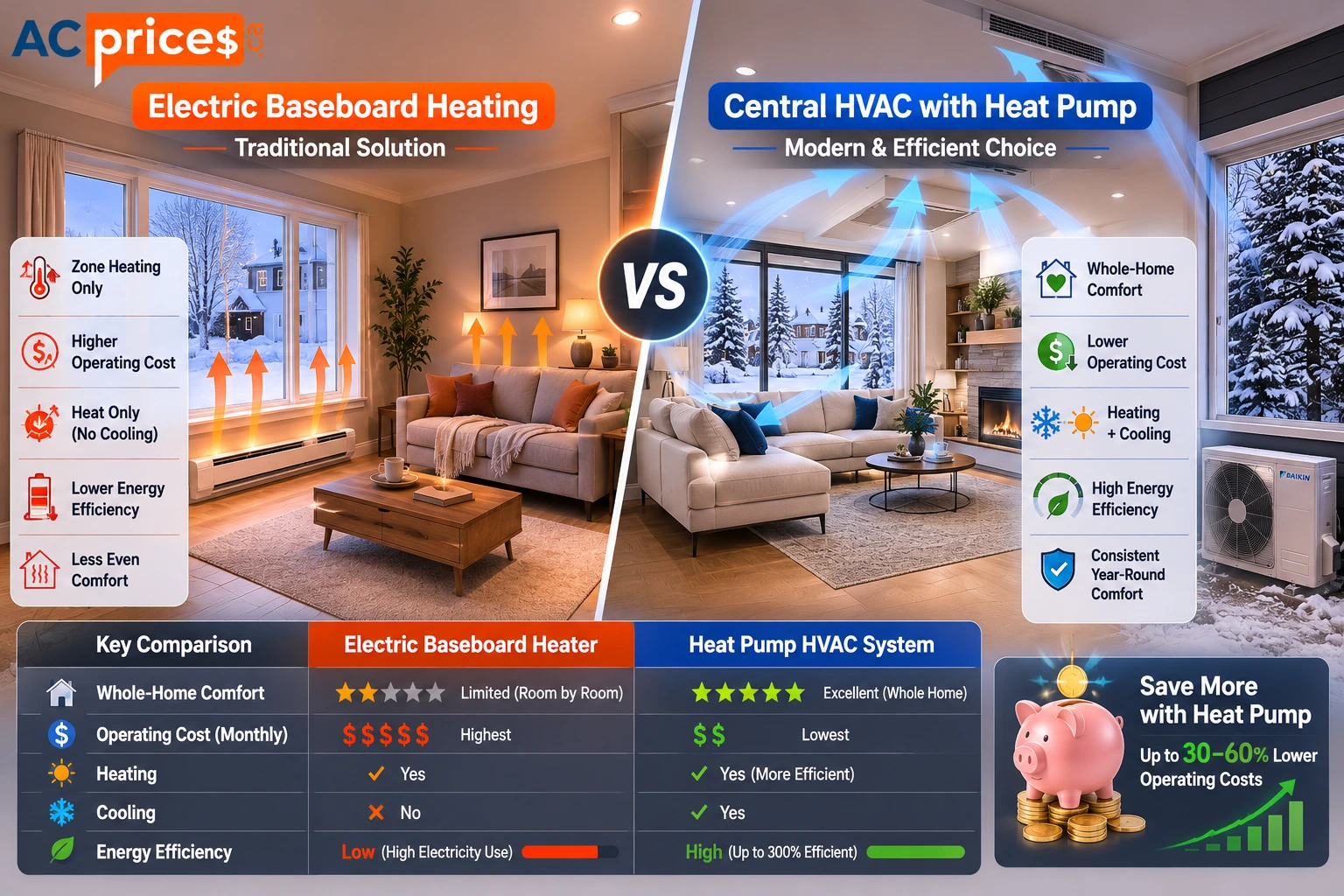
Yes, relative to gas furnaces and heat pumps — electric baseboard heating typically runs 30–60% higher per year in cold Canadian climates, though upfront installation is the cheapest of the three.
Are baseboard heaters expensive to run in winter?
Yes. A baseboard heater can significantly increase electricity bills during Canadian winters, especially in poorly insulated homes.
Is a baseboard heater cheaper than a furnace?
Installation is cheaper, but operating costs are much higher over time compared to gas furnaces or heat pumps.
How much does baseboard heater installation cost in Canada?
Electric units typically run $200–$450 per unit installed; hydronic systems tied to a boiler run $600–$1,400 per zone, depending on electrical work and region.
Can I add a smart thermostat to a baseboard heater?
Yes, but you must use thermostats rated for line-voltage (120V/240V) systems.
Modern units are safe when properly installed, but clearance from furniture and curtains is essential.
Conclusion: Should You Keep or Replace Your Baseboard Heater?
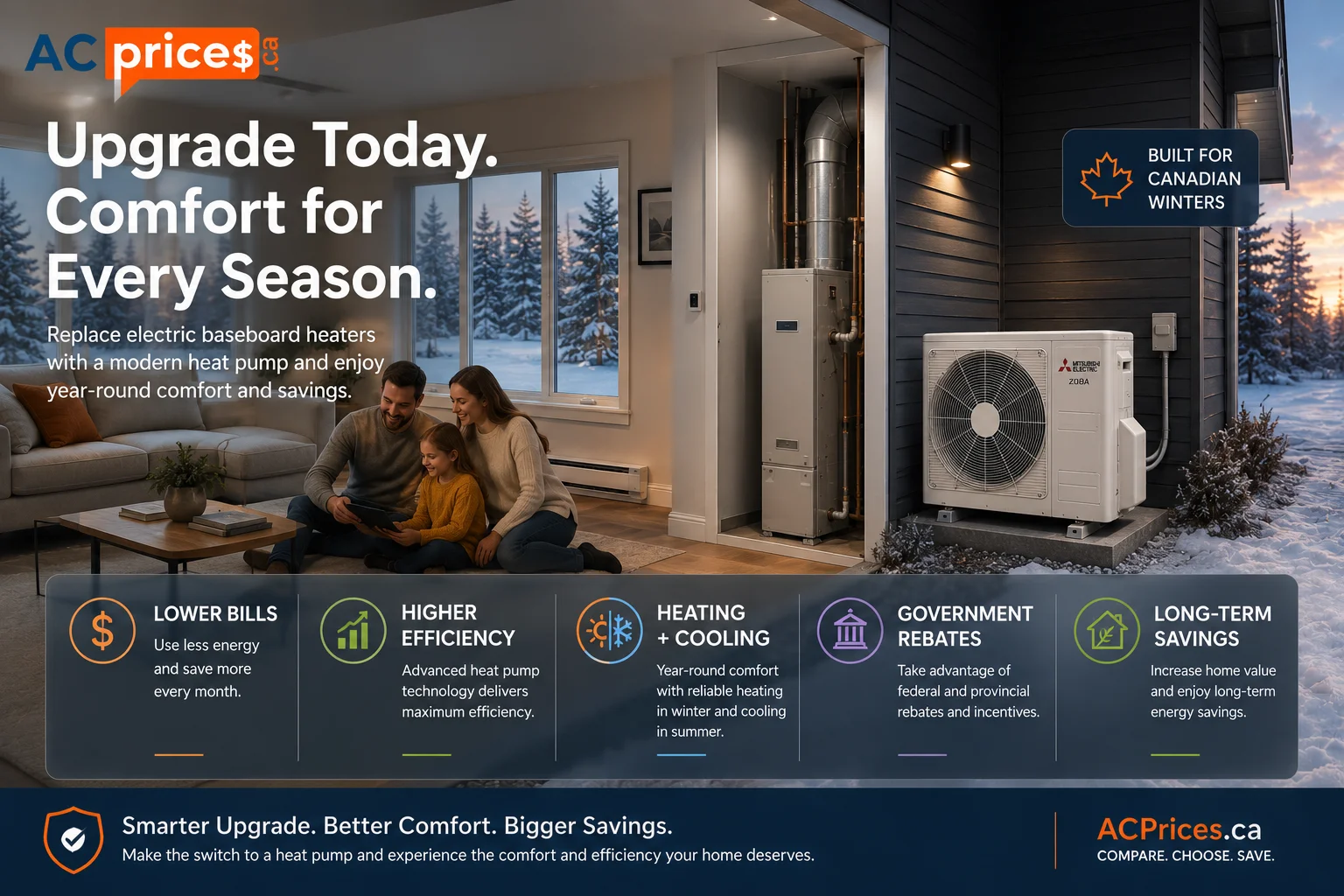
A baseboard heater is simple, reliable, and common in Canadian housing—but it’s rarely the most cost-effective long-term solution. For small spaces or rentals, it can still make sense. For homeowners facing rising electricity bills, smarter controls or system upgrades are worth serious consideration.
👉 Compare heating and cooling system costs in your area to see whether upgrading could save you money over the next 5–10 years.
Step 1 of 160%
🔧
A/C Repair Cost Calculator
How much will repairing your existing A/C cost? Answer a few questions about what you're experiencing and get a repair cost estimate.
How well has your A/C been cooling your home lately?
Have you noticed large indoor temperature fluctuations?
Is the thermostat on and appears to be functioning properly?
Have you noticed reduced airflow from vents even though the A/C is on?
Have you noticed air coming from vents feels warm?
Is the fan spinning very slowly or not at all on outdoor unit?
Does the air conditioner fan appear to never shut off (outdoor unit)?
Have you noticed strange odours coming from vents or near your furnace?
Have you noticed any unusual noises?
What best describes the unusual noise(s)?
Does your A/C turn on but shuts off soon after?
Does the breaker regularly trip or fuses repeatedly blow?
Have you noticed water damage or water leaking or pooling near your furnace?
Have you noticed ice build up on the refrigerant lines, copper tubing, or coil?
Have your electrical bills been significantly higher than usual lately?
Would you like to receive a free no-obligation estimate from our local contractor partners as well?
Great! Almost done, your result is on the next page.
Please enter your contact details so our Certified contractors can provide estimates as well.
This field is required.
Please enter a valid email address.
Please enter your phone number.
Please enter your city or postal code.
By submitting this form, you are giving your consent to receive phone calls and text messages from our contractor partners.
You're almost done!
Please provide your details to see your results.
Name is required.
Email is required.
Please enter your city or postal code.
🔧 Diagnosis Complete
Your A/C Repair Estimate
Estimated Repair Range
—
Likely Issue
—
Get an Accurate Repair Quote
A certified HVAC technician can diagnose the exact issue and provide a firm quote. Many offer free diagnostics.
Have questions about selecting or sizing your next air conditioner? Our expert-backed guides and local contractor directory can help you make a confident decision. Visit acprices.ca to learn more or request free quotes from certified installers near you.
📌 When Are You Planning to Install a New AC?
Let us know your preferred timeline so we can match you with the right local professionals:
Our network of certified contractors covers most major Canadian regions, offering support whether you’re replacing an older system or evaluating new AC models.
 Canadian